Welcome To ScivoraHub Educational Platform

AI in Public Services: How Artificial Intelligence Is Transforming Government Services in 2026
Discover how AI is transforming public services in 2026. Explore AI in healthcare, transportation, smart cities, emergency response, and digital government in this complete guide.
ARTIFICIAL INTELLIGENCE
Scivora Editorial Team
7/16/20266 min read
AI in Public Services: How Artificial Intelligence Is Transforming Government Services in 2026
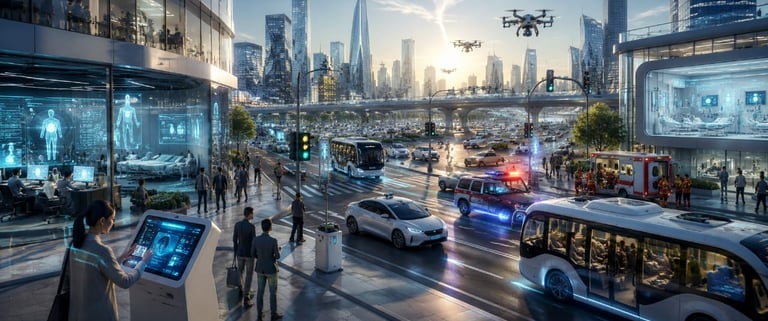
Artificial Intelligence (AI) is transforming the way governments deliver public services across the world. From healthcare and education to transportation and public safety, AI-powered technologies are helping public institutions become faster, smarter, and more efficient. By automating routine tasks, analyzing large volumes of data, and supporting better decision-making, governments can improve service quality while reducing operational costs.
In 2026, AI is no longer an experimental technology for the public sector. Many governments are already using intelligent systems to enhance citizen services, manage smart cities, strengthen emergency response, and improve administrative efficiency. This shift is creating more transparent, accessible, and citizen-focused public services.
In this comprehensive guide, you'll learn what AI in public services is, how it works, where it is being used today, its benefits and challenges, and what the future of AI-powered government services looks like


What Is AI in Public Services?
Artificial Intelligence (AI) in public services refers to the use of intelligent technologies by governments and public sector organizations to improve how services are delivered to citizens. Instead of relying only on manual processes, AI helps automate repetitive tasks, analyze large datasets, detect patterns, and support faster decision-making.
Governments use AI to make public services more efficient, accurate, and accessible. Whether it is processing tax applications, managing traffic systems, supporting healthcare professionals, or responding to emergencies, AI enables public institutions to serve citizens more effectively while reducing costs and administrative workloads.
Today, AI technologies such as Machine Learning, Natural Language Processing (NLP), Computer Vision, and Predictive Analytics are being integrated into many government departments around the world. These technologies help improve service quality while creating a better experience for citizens.
Why Governments Are Adopting AI?
Governments around the world are under increasing pressure to provide faster, more transparent, and citizen-friendly services. Traditional administrative processes often involve paperwork, long waiting times, and repetitive manual tasks, making it difficult to meet growing public expectations.
Artificial Intelligence (AI) helps governments overcome these challenges by automating routine operations, analyzing massive amounts of data, and improving decision-making. Instead of replacing public employees, AI acts as a powerful assistant that increases productivity and allows staff to focus on more complex and citizen-centered responsibilities.
As digital transformation continues, AI is becoming a key technology for building smarter governments that can deliver efficient, secure, and accessible public services.
Key Reasons Governments Are Investing in AI
Improve the speed of public services
Reduce paperwork and manual processing
Lower operational costs
Enhance transparency and accountability
Detect fraud and suspicious activities
Improve data-driven decision-making
Provide 24/7 digital assistance through AI chatbots
Increase citizen satisfaction
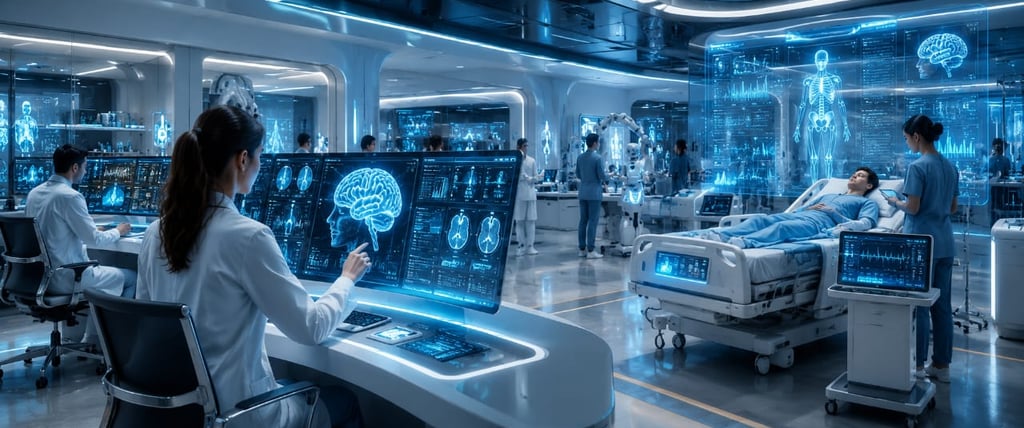
Healthcare is one of the fastest-growing areas where Artificial Intelligence (AI) is making a significant impact. Government hospitals and public health organizations use AI to analyze medical images, assist doctors in diagnosing diseases, predict disease outbreaks, and improve patient care. These intelligent systems help healthcare professionals make faster and more accurate decisions while reducing the workload on medical staff.
AI also improves hospital management by optimizing appointment scheduling, managing medical records, and allocating healthcare resources more efficiently. As a result, patients receive quicker treatment and better healthcare services.
AI in healthcare helps governments by:
Detecting diseases at an early stage
Assisting doctors with medical diagnosis
Predicting disease outbreaks
Improving patient record management
Reducing waiting times in hospitals
AI in Education
Governments are increasingly using AI to modernize public education systems. AI-powered learning platforms can personalize lessons based on each student's learning pace, while intelligent tutoring systems provide additional support outside the classroom. Teachers also benefit from automated grading and performance analytics, allowing them to focus more on teaching rather than administrative tasks.
AI also helps education departments analyze student performance trends, identify learning gaps, and make better policy decisions to improve the overall quality of education.
AI in Transportation
How AI Is Transforming Public Services?
AI in Healthcare
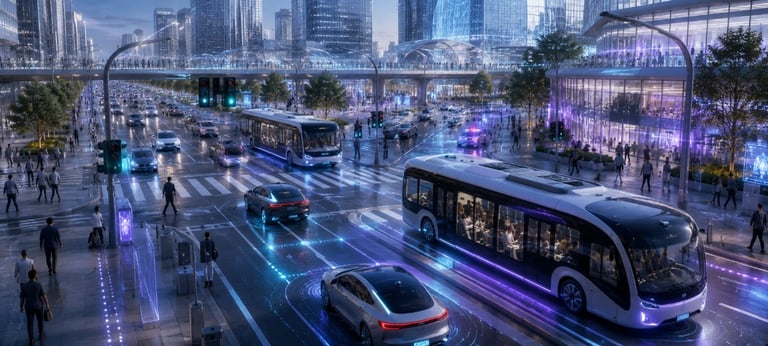
Artificial Intelligence is transforming public transportation by making travel safer, faster, and more efficient. AI-powered traffic management systems analyze real-time traffic data to reduce congestion, optimize traffic signals, and improve road safety. Many cities are also using AI to monitor public transport networks and predict maintenance needs before problems occur.
In addition, AI helps commuters through smart route planning, real-time travel updates, and intelligent fleet management. These innovations reduce travel time, lower fuel consumption, and improve the overall public transportation experience.
Benefits of AI in transportation include:
Smart traffic signal management
Reduced traffic congestion
Improved road safety
Real-time route optimization
Better public transport scheduling
AI in Public Safety and Emergency Response
Artificial Intelligence plays an important role in improving public safety and emergency response. Governments use AI to monitor public spaces, detect unusual activities, analyze emergency situations, and support disaster management. During emergencies, AI systems process real-time information from multiple sources, helping authorities make faster and more informed decisions.
AI also assists emergency services by improving ambulance dispatch, predicting disaster risks, and enhancing communication between police, firefighters, and medical teams. These capabilities help save lives and reduce response times.
AI improves emergency response by:
Detecting emergencies more quickly
Supporting disaster management
Improving ambulance dispatch
Enhancing public safety monitoring
Assisting law enforcement agencies


AI in Smart Cities
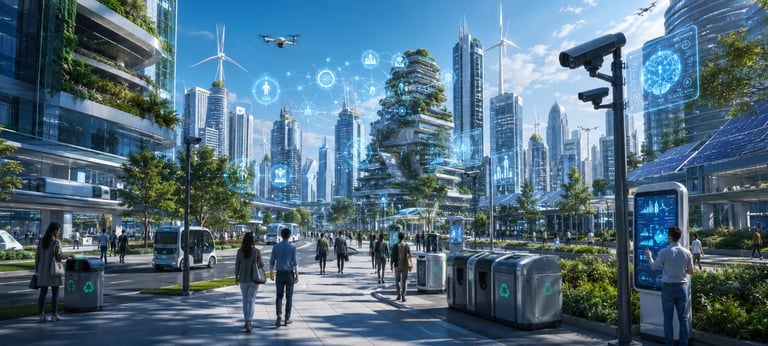
Artificial Intelligence is becoming the foundation of modern smart cities. Governments use AI to manage traffic flow, monitor energy consumption, optimize waste collection, improve water distribution, and enhance environmental protection. By analyzing real-time data from connected sensors and IoT devices, AI helps city authorities make faster and more informed decisions.
Smart city technologies also improve the quality of life for citizens by reducing pollution, increasing energy efficiency, and making urban services more reliable. As cities continue to grow, AI will play a critical role in creating safer, cleaner, and more sustainable communities.
AI powers smart cities through:
Intelligent energy management
Smart waste collection
Water supply optimization
Environmental monitoring
Connected public infrastructure
Benefits of AI in Public Services
Artificial Intelligence provides significant advantages for governments and citizens alike. By automating repetitive processes and improving decision-making, AI helps public institutions deliver services more efficiently while reducing operational costs.
Faster government services
Better citizen experience
Reduced operational costs
Improved decision-making
Greater transparency
Enhanced public safety
Better resource management
24/7 digital citizen support
Challenges of Implementing AI in Public Services
Although AI offers many benefits, governments must also address several important challenges before implementing AI on a large scale. Protecting citizen data, ensuring transparency, preventing algorithmic bias, and maintaining cybersecurity are essential for building public trust. Governments also need skilled professionals and clear regulations to ensure AI is used responsibly and ethically.
Data privacy concerns
Cybersecurity threats
AI bias and fairness
High implementation costs
Lack of AI expertise
Ethical and legal challenges
The Future of AI in Public Services
The future of Artificial Intelligence in public services looks incredibly promising. Governments worldwide are investing in AI to build smarter cities, improve healthcare systems, modernize education, strengthen cybersecurity, and provide faster digital services. As AI technologies continue to evolve, public institutions will become more efficient, transparent, and responsive to citizens' needs.
However, successful adoption will depend on responsible AI governance, strong data privacy protections, and continuous investment in digital infrastructure. Countries that embrace AI responsibly will be better prepared to meet the challenges of the future while delivering higher-quality public services.
Conclusion
Artificial Intelligence is transforming public services by making governments more efficient, transparent, and citizen-focused. From healthcare and education to transportation, emergency response, and smart cities, AI is helping public institutions deliver faster and more reliable services.
Although challenges such as data privacy, cybersecurity, and ethical considerations remain, responsible AI adoption can unlock enormous benefits for both governments and citizens. As technology continues to advance, AI will play an even greater role in shaping the future of public services around the world.
Frequently Asked Questions (FAQs)
Empowering global education through Artificial Intelligence, innovation, and trusted educational insights
Disclamer | Privacy | Policy | Terms & Conditions | Articles | About us | Contact
© 2026 Scivora Hub. All Rights Reserved..
AI • Education • Innovation • Global LearningS