Welcome To ScivoraHub Educational Platform

How AI Is Changing the Future of Jobs: Opportunities, Risks & Careers (2026 Guide)
Artificial Intelligence is reshaping the global workforce. Discover how AI is creating new career opportunities, automating traditional jobs, and changing the skills needed for the future of work.
AI
ScivoraHub Editorial Team
7/18/202610 min read
How AI Is Changing the Future of Jobs: Opportunities, Risks & Careers (2026 Guide)
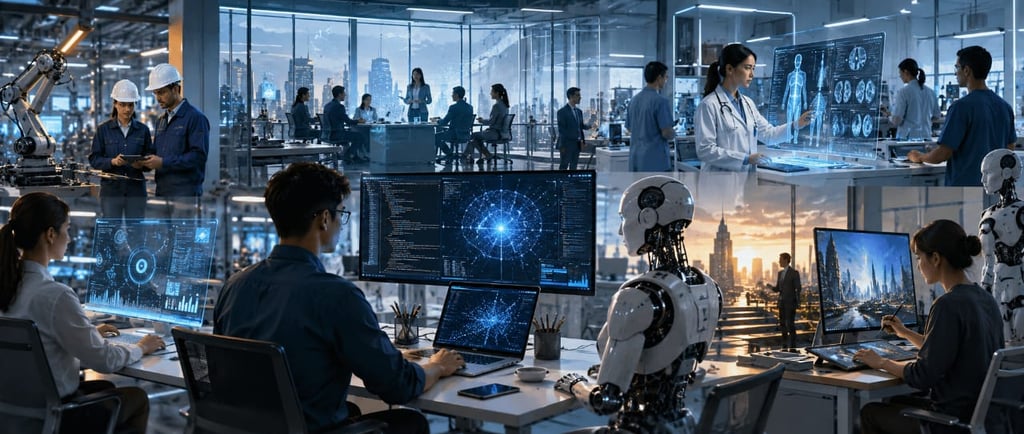
Artificial Intelligence (AI) is transforming the global job market at an unprecedented pace. From automating repetitive tasks to creating entirely new career opportunities, AI is reshaping how people work across nearly every industry. Businesses are increasingly adopting intelligent systems to improve productivity, reduce costs, and support faster decision-making, making AI one of the biggest drivers of workplace innovation in 2026.
While some traditional roles are becoming automated, AI is also creating demand for new skills and professions that did not exist just a few years ago. Careers in AI development, data science, prompt engineering, cybersecurity, and AI governance are growing rapidly as organizations invest in digital transformation.
In this comprehensive guide, you'll learn how Artificial Intelligence is changing the future of jobs, which careers are most affected, the opportunities and risks AI presents, the skills professionals need to stay competitive, and what the future workforce may look like over the coming years.
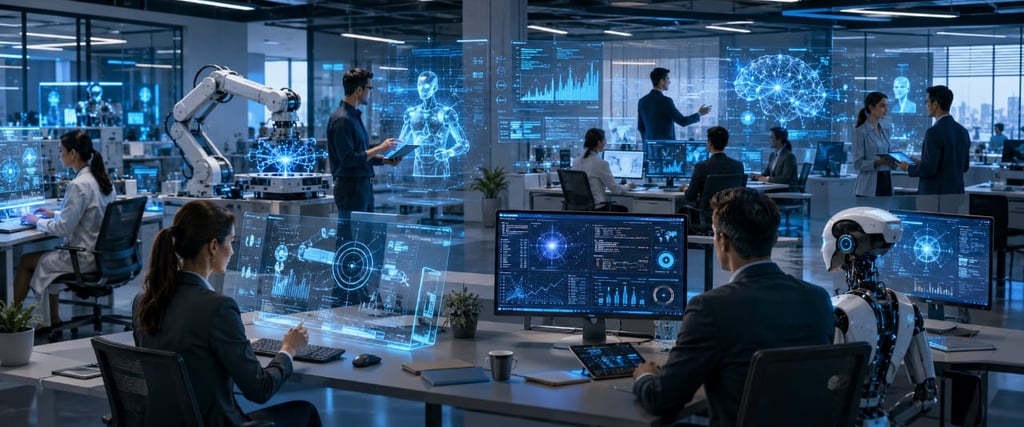

Why AI Is Transforming the Future of Work
Introduction
Artificial Intelligence (AI) is transforming the global job market faster than any previous technological revolution. From automating repetitive tasks to creating entirely new career paths, AI is reshaping how businesses operate and how professionals work. While some traditional jobs are evolving or disappearing, new opportunities in AI careers, data science, cybersecurity, prompt engineering, and automation are emerging across nearly every industry.
Understanding the future of jobs with AI is no longer optional—it's essential for students, professionals, entrepreneurs, and organizations preparing for the workforce of tomorrow. Rather than replacing humans entirely, AI is increasingly becoming a powerful tool that enhances productivity, creativity, and decision-making when used responsibly.
In this comprehensive 2026 guide, you'll discover how Artificial Intelligence jobs are changing, which careers are most likely to grow, what skills employers are looking for, and how you can prepare for a successful future in an AI-driven world.
Table of Contents
What Is the Future of Jobs with AI?
Why AI Is Changing the Global Workforce
Jobs That AI Is Most Likely to Replace
New Career Opportunities Created by AI
AI Skills You Need to Stay Competitive
Industries Being Transformed by AI
Benefits of AI in the Workplace
Challenges and Risks of AI Employment
Human Skills AI Cannot Replace
How to Prepare for an AI-Driven Future
Frequently Asked Questions (FAQ)
Final Thoughts
Key Takeaways
Artificial Intelligence is transforming the future of work across every major industry.
While some repetitive jobs are being automated, AI is also creating thousands of new career opportunities.
High-demand AI jobs include AI engineers, prompt engineers, data scientists, cybersecurity specialists, and AI consultants.
Learning AI skills, problem-solving, and digital literacy will improve long-term career prospects.
Human creativity, emotional intelligence, leadership, and critical thinking remain essential in the AI era.
Businesses that combine human expertise with AI technologies are expected to achieve higher productivity and innovation.
Preparing today for the future of jobs with AI will provide a significant competitive advantage in the coming years.
What Is the Future of Jobs with AI?
Artificial Intelligence is reshaping the future of work by automating repetitive tasks, improving decision-making, and enabling professionals to work more efficiently. Instead of replacing every human job, Artificial Intelligence is changing how work is performed, allowing employees to focus on creativity, innovation, strategic thinking, and complex problem-solving.
The future of jobs with AI is expected to be a collaboration between humans and intelligent machines. AI systems can process massive amounts of data within seconds, identify patterns, and automate routine workflows, while humans continue to provide critical thinking, emotional intelligence, leadership, and ethical decision-making.
Across industries such as healthcare, education, finance, manufacturing, marketing, cybersecurity, and software development, AI is becoming an essential workplace assistant rather than simply a replacement for workers. Organizations that successfully combine human expertise with AI technologies are likely to achieve greater productivity, innovation, and long-term growth.
According to recent industry research, demand for professionals with AI skills continues to grow as businesses invest in automation, machine learning, and intelligent digital solutions. This shift is creating new career opportunities while transforming many existing roles.
📌 Key Areas Where AI Is Transforming Jobs
Automating repetitive and time-consuming tasks
Improving workplace productivity and efficiency
Supporting faster and smarter decision-making
Creating entirely new AI-related careers
Enhancing collaboration between humans and intelligent systems
Driving innovation across multiple industries
If you're new to AI, start by reading our Generative AI Explained: How It Creates Text, Images, Code, and More (2026 Guide) to understand the technology behind today's intelligent systems.
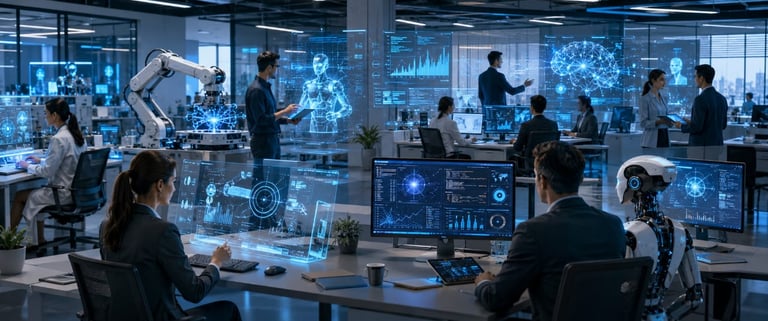
Why AI Is Changing the Global Workforce?
The rapid advancement of Artificial Intelligence is transforming the global workforce because businesses are under constant pressure to become more efficient, productive, and competitive. AI-powered technologies help organizations automate repetitive tasks, analyze vast amounts of data, reduce operational costs, and make faster decisions. As a result, companies across nearly every industry are investing heavily in AI-driven solutions.
Unlike previous technological revolutions, AI is not limited to manufacturing or automation. Today, it supports professionals in healthcare, education, finance, customer service, marketing, software development, logistics, and even creative industries. Instead of replacing every worker, AI often acts as a digital assistant that improves accuracy and allows employees to focus on higher-value work.
The future of jobs with AI is also being shaped by the growing demand for digital transformation. Organizations need professionals who can understand AI tools, work alongside intelligent systems, and adapt to new technologies. This is creating a significant shift in the skills employers expect from both new graduates and experienced professionals.
As AI continues to evolve, businesses that embrace innovation while investing in employee training are expected to lead the next generation of economic growth.
Major Factors Driving AI Adoption
Increased workplace productivity
Automation of repetitive and manual tasks
Faster data analysis and smarter decision-making
Rising demand for personalized customer experiences
Improved cybersecurity and fraud detection
Cost reduction and operational efficiency
Growing investment in AI research and innovation
💡 Quick Fact
According to global workforce trends, AI is expected to automate some routine tasks while creating millions of new technology-focused roles over the coming years, making continuous learning more important than ever.
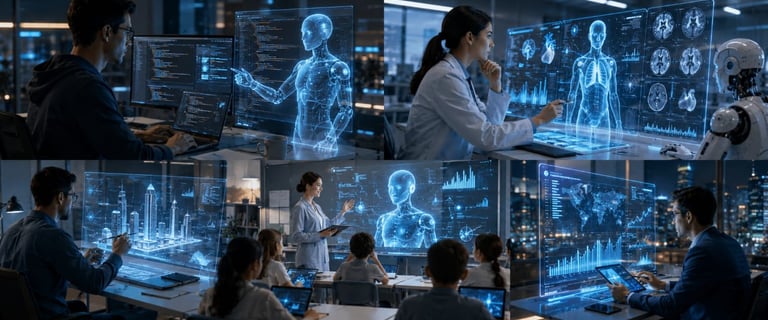
To understand how AI creates the content used in many modern workplaces, read our Generative AI Explained guide.
Jobs That AI Is Most Likely to Replace
As Artificial Intelligence becomes more capable, certain repetitive and predictable jobs are becoming increasingly automated. However, this does not mean AI will replace every profession. Instead, AI is most effective at handling routine, rule-based tasks, allowing human workers to focus on creativity, problem-solving, communication, and strategic decision-making.
Industries that rely heavily on repetitive workflows are already seeing significant changes. Many organizations are using AI to improve efficiency rather than completely eliminate human employees. In most cases, jobs are evolving instead of disappearing.
✅: Jobs Most Vulnerable to AI Automation
Data Entry Clerks
Basic Customer Support Agents
Cashiers and Self-Checkout Roles
Telemarketing Representatives
Manufacturing Assembly Workers
Basic Bookkeeping and Accounting Tasks
Routine Administrative Assistants
Simple Content Moderation Roles
✅: Jobs Likely to Grow Because of AI
AI Engineers
Machine Learning Engineers
Prompt Engineers
AI Product Managers
Cybersecurity Specialists
Data Scientists
AI Ethics Consultants
Robotics Engineers
Cloud AI Architects
AI Trainers and AI Auditors
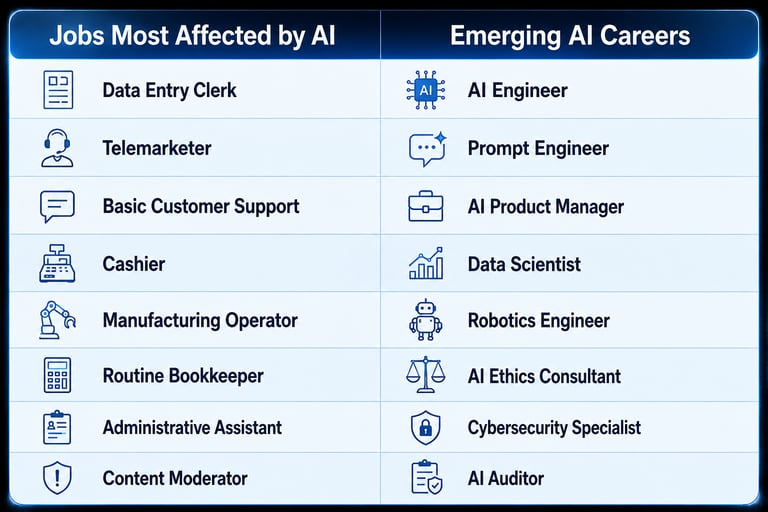
The table above highlights an important trend: while Artificial Intelligence is automating many repetitive roles, it is simultaneously creating new, high-value careers that require technical expertise, creativity, and critical thinking. Professionals who continuously learn new digital skills will be better prepared for the future of jobs with AI.
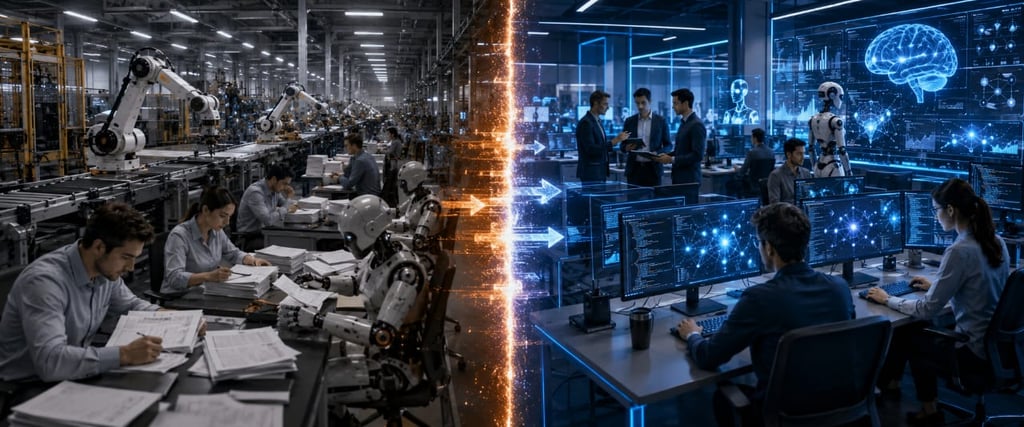
Interested in building AI skills? Explore our guide on Generative AI Explained to understand one of the fastest-growing technologies shaping future careers.
AI Skills You Need to Stay Competitive
The rapid growth of Artificial Intelligence is changing what employers expect from job candidates. While technical knowledge is valuable, companies are increasingly looking for professionals who can combine AI tools with creativity, communication, and critical thinking. Developing the right AI skills today can significantly improve your career opportunities in the coming years.
Whether you're a student, freelancer, entrepreneur, or experienced professional, learning how to work alongside AI will become an essential part of long-term career success. Instead of competing against AI, successful professionals will learn how to use it as a powerful productivity and decision-making partner.
Essential AI Skills for the Future
Prompt Engineering – Writing effective prompts for AI tools.
AI Literacy – Understanding how Artificial Intelligence works and where it should be used.
Data Analysis – Interpreting data to support business decisions.
Programming Basics – Learning Python or JavaScript for AI-related tasks.
Critical Thinking – Evaluating AI-generated information accurately.
Problem Solving – Using AI to solve real-world challenges.
Communication Skills – Explaining AI insights clearly to teams and clients.
Cybersecurity Awareness – Protecting sensitive data while using AI tools.
Adaptability – Keeping up with rapidly changing technologies.
Continuous Learning – Regularly upgrading your knowledge as AI evolves.
Why Human Skills Still Matter
Although Artificial Intelligence can automate repetitive tasks, it cannot fully replace uniquely human abilities such as empathy, leadership, emotional intelligence, ethical judgment, creativity, negotiation, and relationship building. These skills will become even more valuable as AI adoption increases across industries.
The future workplace will reward professionals who successfully combine AI skills with strong human capabilities.
💡 Pro Tip
Learn how to use AI effectively instead of fearing it. Professionals who understand both technology and human-centered problem solving will have the greatest career opportunities in the AI era.
If you want to understand how modern AI systems generate content, explore our Generative AI Explained: How It Creates Text, Images, Code, and More (2026 Guide).
Google AI — https://ai.google/
Microsoft AI — https://www.microsoft.com/ai
Industries Being Transformed by AI
Artificial Intelligence is no longer limited to the technology sector. Today, it is transforming nearly every major industry by improving efficiency, reducing costs, enhancing decision-making, and delivering better customer experiences. Businesses worldwide are investing in AI-powered solutions to remain competitive in an increasingly digital economy.
From healthcare and education to finance and manufacturing, AI is helping professionals automate repetitive tasks while enabling faster innovation. As adoption continues to grow, understanding how AI impacts different industries will help individuals prepare for future career opportunities.
Healthcare
AI assists doctors in diagnosing diseases, analyzing medical images, predicting health risks, and developing personalized treatment plans. Hospitals also use AI to improve patient care and streamline administrative tasks.
Education
AI-powered learning platforms provide personalized education, automated grading, intelligent tutoring systems, and adaptive learning experiences that help students learn more effectively.
Finance
Banks and financial institutions use AI for fraud detection, risk analysis, algorithmic trading, customer support, and personalized financial recommendations.
Manufacturing
Smart factories rely on AI-powered robots, predictive maintenance, quality inspection, and automated production systems to increase efficiency and reduce operational costs.
Retail & E-commerce
Retail businesses use AI for personalized product recommendations, inventory management, demand forecasting, and AI-powered customer service.
Cybersecurity
AI helps organizations detect cyber threats, identify suspicious activities, respond to attacks faster, and strengthen digital security systems.
💡 Quick Summary
The industries adopting Artificial Intelligence today are expected to create some of the fastest-growing career opportunities over the next decade. Professionals with strong AI skills will have a significant advantage across multiple sectors.


Want to understand how AI creates content used across many of these industries? Read our Generative AI Explained: How It Creates Text, Images, Code, and More (2026 Guide).
IBM AI Research — https://research.ibm.com/artificial-intelligence
NVIDIA AI — https://www.nvidia.com/en-us/ai-data-science/
Benefits of AI in the Workplace
Businesses around the world are adopting Artificial Intelligence because it delivers measurable improvements in productivity, efficiency, and innovation. Rather than replacing human workers, AI often acts as a powerful assistant that helps professionals complete tasks faster, reduce errors, and make better decisions.
Organizations that successfully integrate AI into daily operations can save time, lower costs, and improve customer satisfaction while allowing employees to focus on more strategic and creative work.
Key Benefits of AI for Businesses and Employees
Increased Productivity – AI automates repetitive tasks, allowing employees to focus on higher-value work.
Faster Decision-Making – AI analyzes large amounts of data in seconds and provides valuable insights.
Improved Accuracy – AI reduces human error in data processing, reporting, and routine operations.
Better Customer Experience – AI chatbots and virtual assistants provide instant support 24/7.
Cost Savings – Automation reduces operational expenses and improves resource utilization.
Enhanced Innovation – AI helps businesses develop new products, services, and creative solutions.
Stronger Cybersecurity – Intelligent systems detect threats and unusual activities before they become major problems.
Personalized Services – AI delivers customized recommendations and experiences based on user behavior.
💡 Real-World Example
A modern hospital may use Artificial Intelligence to analyze medical scans, while doctors make the final diagnosis. Similarly, an e-commerce company can use AI to recommend products, but human teams still manage customer relationships, business strategy, and quality control.
This demonstrates that the future of jobs with AI is based on collaboration—not competition—between humans and intelligent systems.
📌 Key Insight
The greatest advantage of AI is not replacing people—it's helping people work smarter, faster, and more efficiently.
Learn more about the technology behind modern AI by reading our Generative AI Explained: How It Creates Text, Images, Code, and More (2026 Guide).
Challenges and Risks of AI Employment
While Artificial Intelligence offers significant benefits, it also presents several challenges that individuals, businesses, and governments must address. Understanding these risks is essential for building a future where AI supports people rather than creating unnecessary disruption.
One of the biggest concerns is job displacement. As AI automates repetitive tasks, some traditional roles may change or disappear. However, history shows that technological advancements also create new industries and career opportunities. The key challenge is ensuring that workers have access to education and reskilling programs.
Another important issue is the ethical use of AI. Businesses must ensure that AI systems make fair decisions, protect user privacy, and remain transparent in how they process data. Responsible AI development helps build trust among employees, customers, and society.
Major Challenges
Job displacement in repetitive roles
Skills gap and workforce reskilling
Data privacy and cybersecurity risks
Bias in AI algorithms
Overdependence on automation
Ethical and legal concerns
Misinformation generated by AI
Unequal access to AI technologies
How Organizations Can Prepare?
Businesses and educational institutions should invest in continuous learning, AI literacy, employee training, and responsible AI governance. By combining human expertise with intelligent technologies, organizations can reduce risks while maximizing the benefits of AI adoption.
💡 Expert Tip
The future belongs to professionals who continuously learn new skills. Instead of fearing AI, focus on developing technical knowledge alongside communication, creativity, leadership, and critical thinking.
To better understand one of the technologies driving workplace transformation, explore our Generative AI Explained guide.
International Labour Organization (ILO) – Future of Work
Frequently Asked Questions (FAQs)
Conclusion
The future of jobs with AI is not about humans versus machines—it's about collaboration. Artificial Intelligence is transforming industries, creating new career opportunities, and changing the skills needed to succeed in the modern workplace.
Professionals who embrace lifelong learning, develop AI skills, and strengthen uniquely human abilities such as creativity, leadership, communication, and ethical decision-making will be well positioned for success. Rather than fearing AI, individuals should see it as a powerful tool that can increase productivity, unlock innovation, and create exciting career possibilities.
As AI continues to evolve, the most successful professionals will be those who adapt, stay curious, and continuously invest in learning new technologies. Ready to future-proof your career? Explore more AI guides, tutorials, and technology insights on Scivora Hub to stay ahead in the rapidly evolving world of Artificial Intelligence.
About the Author
Scivora Hub publishes well-researched, easy-to-understand articles on Artificial Intelligence, emerging technologies, digital innovation, and the future of work. Our mission is to help readers stay informed with practical, reliable, and future-focused content.
🌍 Trusted Resources
World Economic Forum – Future of Jobs Report
International Labour Organization (ILO)
Google AI
Microsoft AI
IBM Research AI
NVIDIA AI
Empowering global education through Artificial Intelligence, innovation, and trusted educational insights
Disclamer | Privacy | Policy | Terms & Conditions | Articles | About us | Contact
© 2026 Scivora Hub. All Rights Reserved..
AI • Education • Innovation • Global LearningS