Welcome To ScivoraHub Educational Platform

Generative AI Explained: How It Creates Text, Images, Code, and More (2026 Guide)
Learn what Generative AI is, how it creates text, images, code, music, and videos, the technologies behind it, real-world applications, benefits, risks, and future trends in this complete 2026 guide.
ARTIFICIAL INTELLIGENCE
Scivora Editorial Team
7/17/20267 min read
Generative AI Explained: How It Creates Text, Images, Code, and More (2026 Guide)

What Is Generative AI?
Introduction
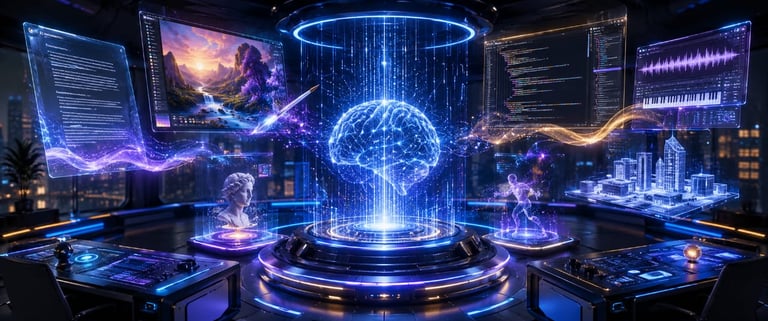
Generative Artificial Intelligence (Generative AI) is one of the most revolutionary technologies shaping the digital world in 2026. Unlike traditional AI systems that primarily analyze data or make predictions, Generative AI can create entirely new content, including text, images, videos, music, computer code, and even realistic 3D designs. This breakthrough has transformed industries by enabling faster creativity, smarter automation, and innovative problem-solving.
Powered by advanced deep learning models and massive datasets, Generative AI understands patterns in existing information and uses that knowledge to generate original outputs based on user prompts. From writing articles and designing graphics to building software and creating digital art, it is changing how individuals and businesses work.
In this comprehensive guide, you'll learn what Generative AI is, how it works, the technologies behind it, the different types of content it can produce, its limitations, ethical considerations, and why it is becoming one of the most important innovations of the modern AI era.
⭐ Key Takeaways
Generative AI creates new content such as text, images, videos, music, and software code.
It uses advanced technologies like Transformers, Large Language Models (LLMs), Diffusion Models, and GANs.
Better prompts usually produce more accurate and higher-quality results.
Human oversight and ethical AI practices remain essential.
Generative AI is transforming the way people create and work across many industries.
Table of Contents
What Makes Generative AI Different from Traditional AI?
How Does Generative AI Work?
Core Technologies Behind Generative AI
Transformer Architecture
Large Language Models (LLMs)
Diffusion Models
Generative Adversarial Networks (GANs)
What Can Generative AI Create?
Text Generation
Image Generation
Code Generation
Audio and Music Generation
Video Generation
Prompt Engineering: Why Better Prompts Produce Better Results
Limitations of Generative AI
Responsible AI and Ethical Considerations
Frequently Asked Questions (FAQs)
Conclusion
Trusted Resources
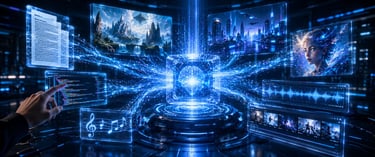
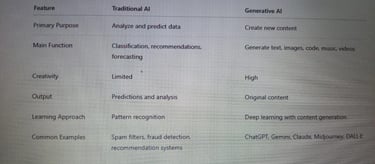
What Makes Generative AI Different from Traditional AI?
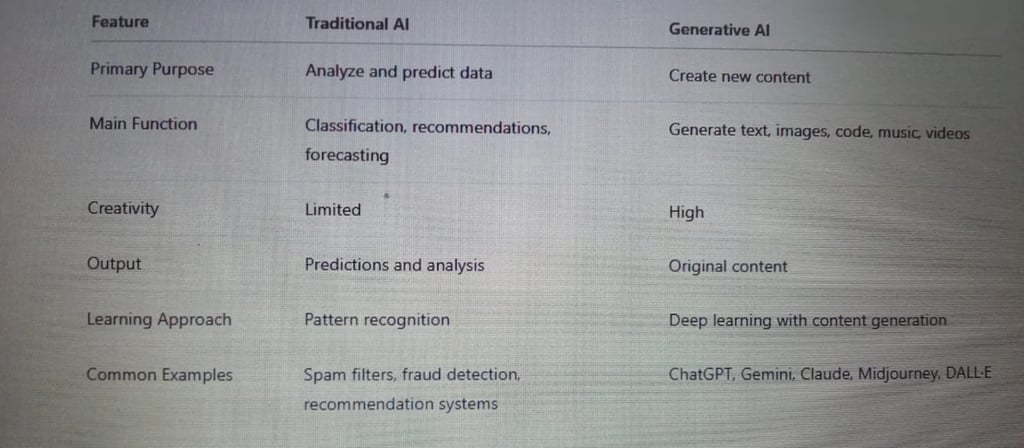
Traditional Artificial Intelligence is designed to analyze information, recognize patterns, and make predictions based on existing data. In contrast, Generative AI goes a step further by creating entirely new and original content instead of simply interpreting information. This ability makes Generative AI one of the most innovative branches of Artificial Intelligence.
Rather than only answering questions or classifying data, Generative AI can write articles, generate realistic images, produce computer code, compose music, and even create videos from simple user instructions. It learns from massive datasets using advanced Deep Learning techniques and Large Language Models (LLMs) to understand context, language, and creativity.
This shift from data analysis to content generation is what distinguishes Generative AI from traditional AI systems and makes it valuable for creators, developers, businesses, educators, and researchers.
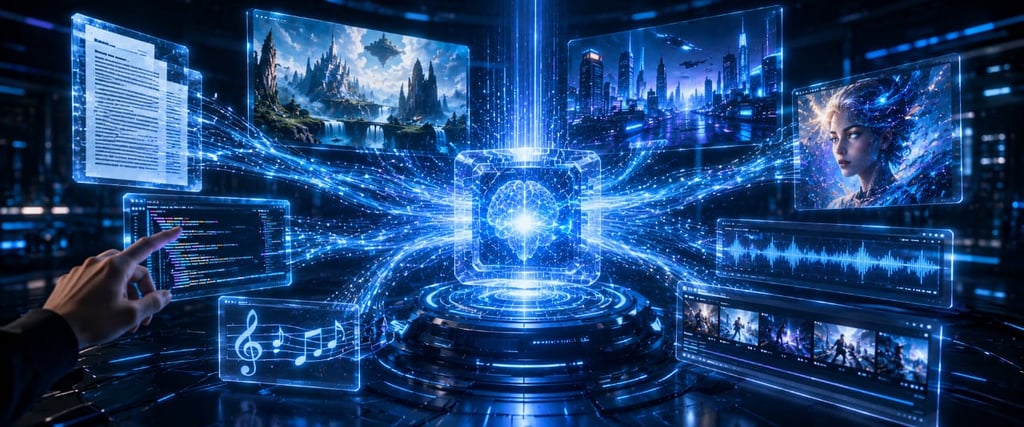
As shown above, Generative AI is designed to create entirely new content, while traditional AI primarily focuses on analyzing existing information and making predictions. This ability to generate original outputs is what makes Generative AI one of the most transformative technologies in today's digital world.
How Does Generative AI Work?
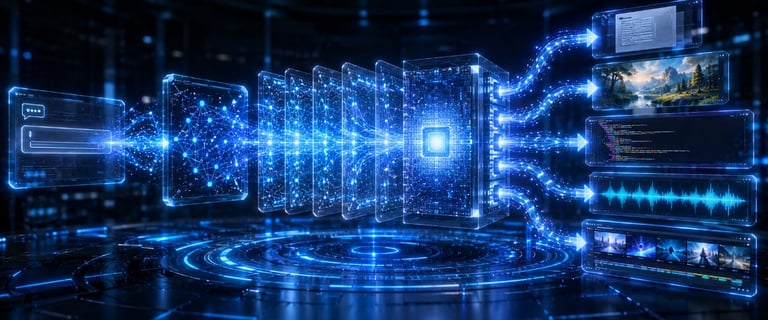

At its core, Generative AI learns by analyzing enormous amounts of data, including books, articles, images, videos, audio, and software code. During training, advanced AI models identify patterns, relationships, and structures within the data instead of memorizing every piece of information. This allows the system to generate new and meaningful content when it receives a prompt from a user.
When you enter a prompt, the AI processes your request using a Large Language Model (LLM) or another specialized generative model. It predicts the most appropriate sequence of words, pixels, sounds, or code based on everything it has learned during training. The result is original content that closely matches the user's instructions.
Modern Generative AI systems rely on Transformer architecture, which enables them to understand context, maintain consistency, and generate high-quality responses. The better and more specific the prompt, the more accurate and useful the generated output is likely to be. Many modern generative models are built on Deep Learning techniques that power advanced neural networks and intelligent content generation.
Core Technologies Behind Generative AI
Behind every powerful Generative AI system are advanced technologies that work together to understand information and create new content. These technologies allow AI models to process language, generate realistic images, produce software code, and even create music or videos. Understanding these core technologies helps explain why modern Generative AI is so capable and versatile.
While different AI systems use different architectures, most modern generative models are built using a combination of Transformers, Large Language Models (LLMs), Diffusion Models, and Generative Adversarial Networks (GANs).
Transformer Architecture
Transformer architecture is the foundation of most modern language AI systems. Instead of processing information one word at a time, transformers analyze relationships between words across an entire sentence or paragraph. This enables Generative AI to better understand context and generate more natural, accurate, and coherent responses.
Large Language Models (LLMs)
Large Language Models (LLMs) are AI systems trained on massive collections of books, articles, websites, and other text. They learn language patterns, grammar, reasoning, and context, allowing them to answer questions, write content, summarize information, translate languages, and assist users with complex tasks. These technologies are powered by advanced Artificial Intelligence systems that continue to evolve rapidly.
Diffusion Models
Diffusion Models are widely used to generate realistic images and artwork. They begin with random visual noise and gradually refine it into a high-quality image based on the user's prompt. This technology powers many modern AI image generation systems.
Generative Adversarial Networks (GANs)
Generative Adversarial Networks (GANs) use two neural networks working together: one generates new content while the other evaluates whether that content looks realistic. This competitive process helps produce highly realistic images, videos, and synthetic data.

What Can Generative AI Create?
One of the biggest strengths of Generative AI is its ability to create many different types of digital content from a simple prompt. Instead of being limited to one task, modern Generative AI models can produce text, images, software code, audio, videos, and even realistic 3D assets. This flexibility makes Generative AI useful across education, business, software development, marketing, entertainment, and scientific research.
✅ Text Generation
Generative AI can write blog posts, emails, reports, product descriptions, social media captions, and even creative stories. Modern Large Language Models (LLMs) understand context and produce natural, human-like writing based on user instructions.
✅ Image Generation
AI image models create realistic illustrations, concept art, marketing graphics, product mockups, and digital paintings from simple text prompts. This has transformed the workflow of designers, marketers, and content creators.
✅ Code Generation
Developers use Generative AI to write code, explain programming concepts, debug software, generate documentation, and speed up software development. AI coding assistants improve productivity while reducing repetitive work.
✅ Audio and Music Generation
Modern AI systems can generate background music, voice narration, sound effects, and speech synthesis. These capabilities support content creators, game developers, and multimedia production teams.
✅ Video Generation
AI video generation tools are becoming increasingly powerful, allowing users to create animations, promotional videos, educational content, and realistic visual scenes from written prompts. As the technology improves, AI-generated video is expected to become a major part of digital content creation.
💡 Did You Know?
Some modern Generative AI models can understand and generate multiple types of content—including text, images, audio, video, and computer code—within a single system. These are known as multimodal AI models, making them more flexible and powerful than earlier AI systems.


Prompt Engineering: Why Better Prompts Produce Better Results?
The quality of content generated by Generative AI depends heavily on the quality of the prompt. A prompt is simply the instruction or question you give to an AI model. Clear, detailed, and well-structured prompts help the AI understand exactly what you want, resulting in more accurate and useful outputs.
For example, instead of writing "Create an image," a better prompt would describe the subject, style, lighting, colors, aspect ratio, and desired quality. This additional context allows Generative AI to produce results that closely match your expectations.
💡 Pro Tip : Be specific when writing prompts. Include details such as style, tone, audience, colors, dimensions, and purpose. Well-crafted prompts consistently produce higher-quality AI-generated content.
✅ Limitations of Generative AI
Although Generative AI is incredibly powerful, it is not perfect. AI models can sometimes generate incorrect information, misunderstand complex instructions, or produce inconsistent results. Since AI learns from existing data, it may also reflect biases present in its training material.
Users should always verify important information, especially in areas such as healthcare, finance, legal advice, and scientific research. Human review remains essential when using AI for critical tasks.
AI can generate incorrect information (hallucinations)
Responses depend on prompt quality
Knowledge may be outdated
Bias can exist in generated content
Human review is still important
✅ Responsible AI and Ethical Considerations
As Generative AI becomes more powerful, responsible use is becoming increasingly important. Developers, businesses, educators, and governments must ensure that AI is used ethically, transparently, and responsibly. Protecting user privacy, reducing bias, preventing misinformation, and respecting intellectual property are essential for building trust in AI technologies.
Human oversight should always remain part of AI-assisted decision-making, ensuring that technology supports people rather than replacing responsible human judgment.


Conclusion
Generative AI is changing the way people create digital content by making it possible to generate text, images, software code, music, and videos within seconds. Powered by technologies such as Transformers, Large Language Models (LLMs), Diffusion Models, and GANs, it has become one of the most influential innovations in modern Artificial Intelligence.
As the technology continues to evolve, understanding how Generative AI works—and using it responsibly—will become an essential skill for students, professionals, businesses, and creators. By combining human creativity with AI capabilities, we can unlock new possibilities while ensuring ethical and responsible use of this powerful technology.
About the Author
Scivora Hub publishes in-depth, beginner-friendly, and research-backed content on Artificial Intelligence, emerging technologies, and digital innovation. Our goal is to make complex AI concepts simple, practical, and accessible for everyone.
Trusted Resources
OpenAI – https://openai.com/
Google DeepMind – https://deepmind.google/
NVIDIA AI – https://www.nvidia.com/en-us/ai/
Did you enjoy this guide? Explore more AI tutorials and technology insights on Scivora Hub to stay updated with the latest developments in Artificial Intelligence.
Frequently Asked Questions (FAQs)
Empowering global education through Artificial Intelligence, innovation, and trusted educational insights
Disclamer | Privacy | Policy | Terms & Conditions | Articles | About us | Contact
© 2026 Scivora Hub. All Rights Reserved..
AI • Education • Innovation • Global LearningS