
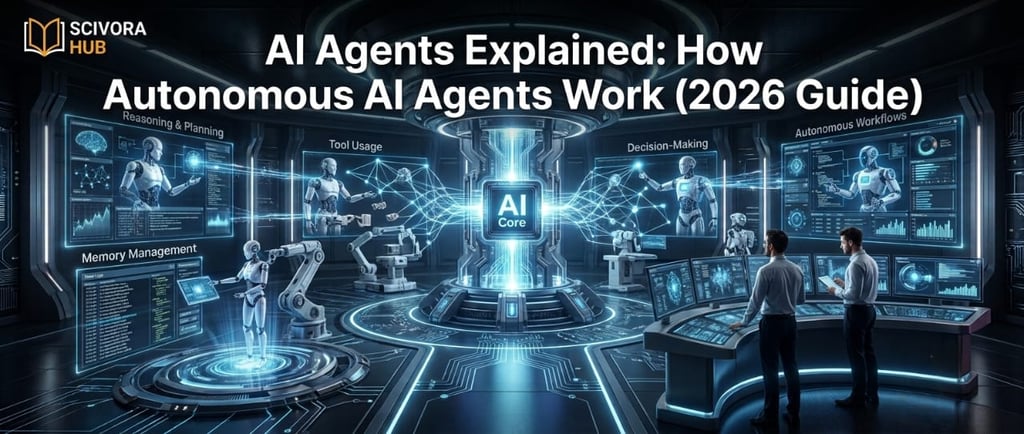
AI Agents Explained: How Autonomous AI Agents Work (2026 Guide)
Introduction
Artificial Intelligence is evolving at an incredible pace, transforming the way people work, communicate, and solve problems. While AI chatbots and virtual assistants have become increasingly common, the next major advancement in artificial intelligence is the rise of AI Agents. These intelligent systems go far beyond answering questions—they can understand objectives, make decisions, plan complex workflows, use external tools, remember previous interactions, and complete tasks with minimal human supervision.
Unlike traditional AI applications that rely on direct human instructions for every step, AI Agents are designed to work more independently. They can analyze a goal, divide it into smaller tasks, gather relevant information, execute actions in the correct order, evaluate the results, and continuously adapt their strategy whenever new information becomes available. This ability makes AI Agents one of the most significant breakthroughs in modern artificial intelligence.
Today, organizations across industries are rapidly adopting AI Agents to automate business operations, accelerate software development, improve customer support, enhance scientific research, optimize enterprise workflows, and simplify everyday productivity tasks. Instead of acting as simple assistants, AI Agents function as intelligent digital workers capable of handling complex multi-step responsibilities.
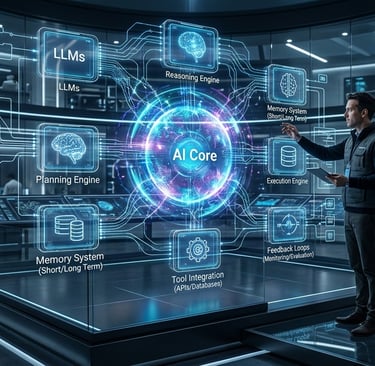
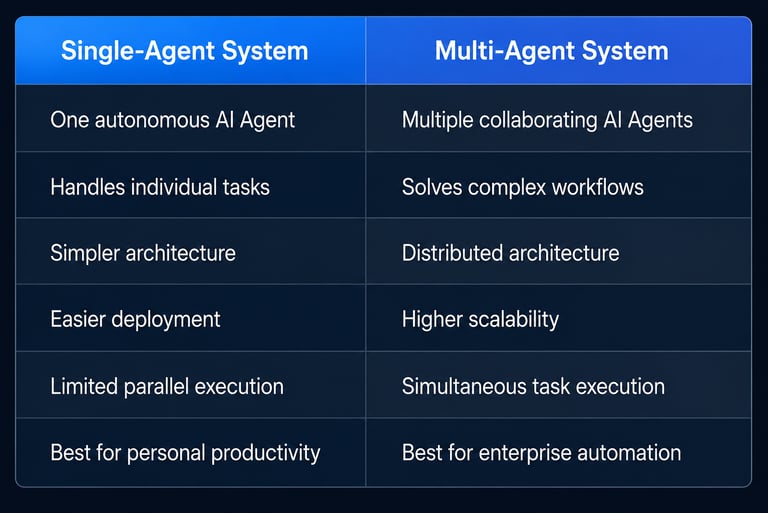
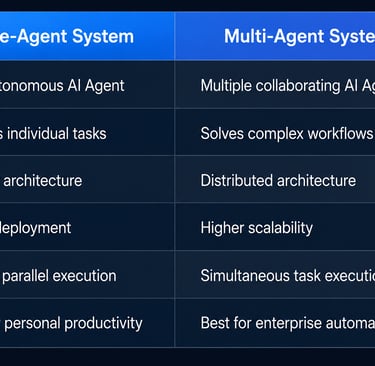
Modern AI Agents combine several advanced technologies, including Large Language Models (LLMs), reasoning engines, planning systems, memory modules, tool integration, and autonomous decision-making. Some advanced systems even allow multiple AI Agents to collaborate together, creating highly efficient multi-agent systems capable of solving problems that would normally require entire human teams.
As artificial intelligence continues to mature, understanding AI Agents has become essential for students, developers, business professionals, researchers, and technology enthusiasts. They represent the future of intelligent automation and are expected to become a core component of next-generation software, enterprise platforms, and digital workplaces.
In this comprehensive 2026 Guide, you'll discover what AI Agents are, how they work, their architecture, core components, reasoning process, planning capabilities, memory systems, different types of AI Agents, common challenges, and why they are considered the future of autonomous artificial intelligence.
Table of Contents
1. What Are AI Agents?
2. Why AI Agents Are Different
3. How AI Agents Work
4. Core Components of AI Agents
5. AI Agent Architecture
6. Single-Agent vs Multi-Agent Systems
7. AI Agents vs Traditional Chatbots
8. Common Challenges of AI Agents
9. Did You Know?
10. Pro Tip
11. FAQs
12. Conclusion
Key Takeaways
• AI Agents are autonomous AI systems that can plan, reason, remember information, and complete tasks independently.
• Unlike traditional chatbots, AI Agents make decisions, use external tools, and continuously adapt during task execution.
• Modern AI Agents combine Large Language Models (LLMs), memory, reasoning, planning, and tool integration.
• AI Agents can collaborate with other AI Agents to solve complex multi-step problems.
• AI Agents are becoming the foundation of next-generation enterprise automation and intelligent software.











Empowering global education through Artificial Intelligence, innovation, and trusted educational insights
Disclamer | Privacy | Policy | Terms & Conditions | Articles | About us | Contact
© 2026 Scivora Hub. All Rights Reserved..
AI • Education • Innovation • Global LearningS